Eye-Detection AF, specifically, has been tuned for improved accuracy and refined recognition of eyes in the scene, regardless of how small or large they are within the image frame, and can also be used in conjunction with custom Wide-Area AF for different subject shapes and sizes.
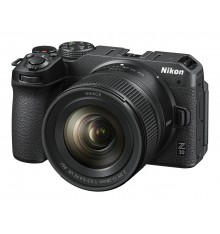
Perfect for portraits, the Z6 III improves on the partially-stacked sensor's inherent capabilities with a series of processing tools and shooting functions to improve portraits:
- Portrait mode processes portraits for skin with natural texture and a rounded feel
- Rich Tone Portrait mode, a picture mode that produces more vivid results while capturing details of the subject's complexion and avoiding loss of detail in the highlights
- Flat Monochrome mode features gentle gradations from highlights to shadows, producing soft monochrome portraits
- Deep Tone Monochrome mode chooses slightly darker tones in the range from shadows to mid-tones, with brightness rapidly increasing as tones progress from mid-tones to highlights
- Skin softening can be used on up to three subjects in a shot and slightly blurs the skin for a more pleasing texture while still retaining essential sharpness on eyes and hair
- Manual white balance control is more intuitive when making adjustments and Auto WB has also been optimized for human subjects
- Take full advantage of Nikon's portrait modes by pairing the Z6 III with one of Nikon's portrait Z lenses, like the 50mm f/1.2 S, the 85mm f/1.2 S, or the 135mm f/1.8 S Plena
Produce ultra-high resolution images at up to approximately 96 megapixels using pixel shift technology. By slightly shifting the image sensor between shots - selectable between 4 and 32 shots per image, with more shots meaning more detail - users can merge the images in NX Studio after shooting to create a single image with enhanced resolution, texture, and color. The shooting method also also reduces noise, moiré, and false colors. Pixel Shift photography benefits archival, landscape, architecture, fine art, macro, and film digitizing applications, and achieves its best results when working with a tripod.

 View full size